
Concept Design
When it comes to deciding what to do with the garden, many people just don’t know where to start. Where’s the best place for the terrace, how big should it be or how can we incorporate a play area for the children?
Of course, these are all questions that would be considered with a full garden makeover, but what happens if you just want some ideas, you might be a proficient DIY-er , maybe you are desperate to do “something” with the garden and need a hand to get started or you may have finished some building work on the house which means that the areas immediately surrounding the house are just not working anymore.
A Concept Plan will give you what you need in order to do this. It won’t be a fully worked up design with calculated levels and detailed dimensions
Urban gardens
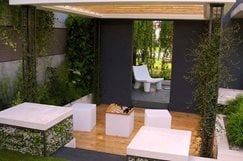
City gardens have to tick lots of boxes, providing outdoor space for planting, relaxation, play and entertaining. Usually in a relatively small area, they need clever designs to make them work well. Most urban gardens become either functional spaces or plant-filled havens into which you can escape hectic city life. They often feature minimal design and repeated patterns for maximum effect.
Wildllfe-friendly gardens
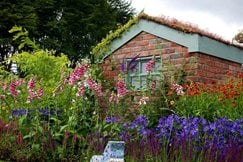
Wildlife-friendly gardens feature plants and structures that attract native wildlife, such as birds, beneficial insects and small mammals. Log piles, hedgehog boxes, bee hotels and more all help to bring wildlife that is interesting to watch, and which will help the gardener by keeping down pests such as slugs and aphids. Many plants are attractive to pollinating insects and you can have a wildlife-friendly garden however big or small your outside space is.
Mediterranean gardens
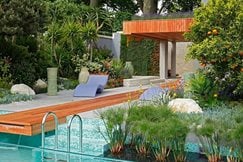
Mediterranean gardens can be formal or informal, and take their inspiration from the shrubby vegetation of the hot, dry climates of the south of France, Italy and Spain. Gravel is often used between drifts of drought-tolerant plants, including lavender, olive trees, rosemary and vines. This is a style that can adapt well to the British climate, but some Mediterranean plants dislike winter wet and will need protection in a cooler climate.
Contemporary gardens
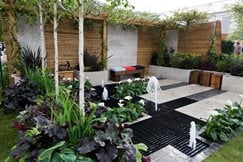
Crisp, clean lines are an intrinsic part of contemporary design, which can be applied to either small or larger gardens. Equally important is the use of space, geometric layout and the absence of too many fussy details and clutter. This all adds up to a garden that could be the perfect antidote to a hectic lifestyle – dynamic yet relaxing.
Materials tend to be natural and timeless such as stone, slate and wood, and plants become just one part of the architecture – think clipped hedges, specimen trees and simple blocks of planting. Water is often used to create reflection, movement or sound.
Formal gardens
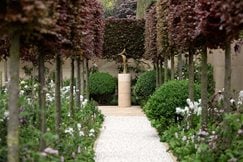
Formal gardens have a balanced design symmetry and a clear floor plan. Their hard and soft landscaping will have a geometric structure, often around a central feature. But despite its grand origins, this style adapts well to gardens of any size, even tiny urban spaces.
Symmetrical planting bordering a linear path that leads to a focal point such as this statue – this is the epitome of formal garden style. Pleached trees in neat rows add height and pattern.
Cottage gardens
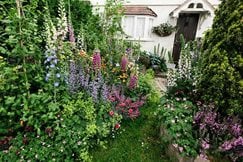
Abundant planting that spills over onto narrow pathways, masses of colour and scented flowers, this is a quintessentially English style. Originally, cottage gardens came about as a means for people to grow lots of fruit, veg and flowers in their countryside plots, but their romantic style captured the hearts of city dwellers, and this style can certainly be easily adapted for an urban garden.
The traditional simple, rectangular layouts are softened by the profusion of plants. However, cottage gardens still need the discipline of repeated colour and planting, with hedging to provide a framework.
City Garden.
<>
City gardens have to tick lots of boxes, providing outdoor space for planting, relaxation, play and entertaining. Usually in a relatively small area, they need clever designs to make them work well. Most urban gardens become either functional spaces or plant-filled havens into which you can escape hectic city life. They often feature minimal design and repeated patterns for maximum effect.

 Victoria's Gardens